Wednesday, March 12, 2025

 EOTO 2 Analysis - Propaganda

I thoroughly enjoyed the second batch of EOTO presentations. The topic and presentation I was most fascinated by was the one on Propaganda. The talk opened my eyes to how important it was in history and wartimes; yet, how prevalent propaganda still is today.   

Propaganda was important throughout history. Commonly, it could be found in the form of posters or speeches. In a world without smartphones, what one saw on the walls or heard on the radio could influence them in day-to-day life. This propaganda wasn’t always positive, but it was usually effective in creating narratives and expectations in society.  

Nowadays, propaganda is not as obvious and straight forward as a blaring “I WANT YOU FOR U.S. ARMY” poster. It is more often spread inadvertently through social media, peer pressure, news outlets, and so on. Even the advertisements we see pop up on our devices can be propaganda used to manipulate consumers and their choices. 

In history, propaganda was used profusely in political movements and wartime efforts. Through the vessel of art and creativity, governments demonized their opposers in order to rally their people against the common cause. Hitler, for example, used propaganda posters to display superiority of his people, while degrading looks and actions of his enemy. He was successful with this effort, as he influenced his people to despise those who didn’t fit the Aryan pinnacle of the human race. I believe this truly proves how effective propaganda was when displayed for unification purposes – but even more so for division purposes. 

We are all influenced by propaganda whether we like to admit it or not. Just on the morning walk to class at HPU, one will be exposed to the “God, Family, Country” tagline more than once. But it works! When asked what High Point University is based on, I recite that line without a second of thought. Which is all the proof I need that propaganda is alive and well in our present society. 

Propaganda and Cynicism

Tuesday, March 11, 2025

Generative AI - EOTO 2  

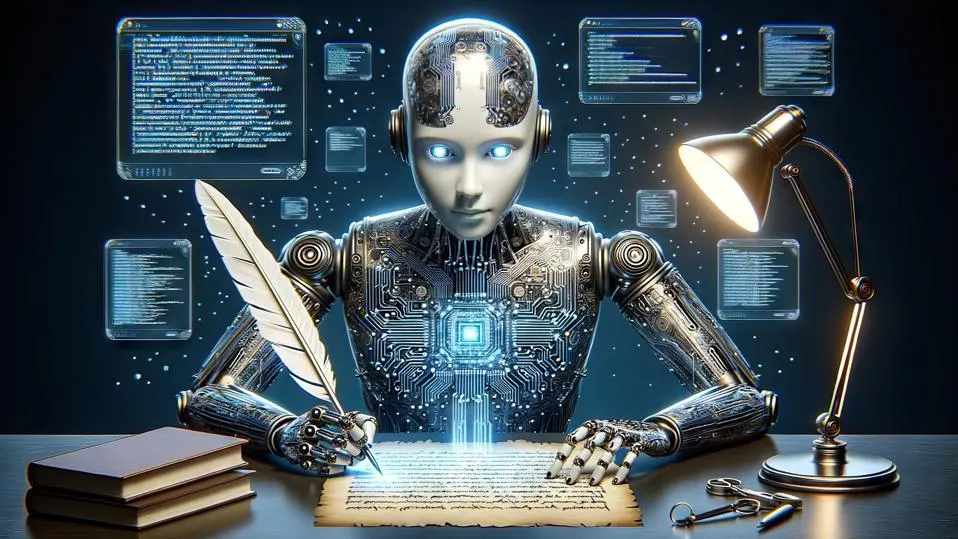
    For many, a life without AI seems impossible. These days, we need AI like we need oxygen, some brains can’t even function without it. Students are no longer able to generate ideas by themselves, and don’t know where to begin creating literature or art without AI. It is singlehandedly responsible for the dimishing originality and quality in school studies. With humans becoming more dependant on the tool, it has gained more power over society. This continual growth has put power into the hands of AI; letting it take over society and personal lives. 

    To be more concise, generative AI is the dilemma that is stripping students of their creativity and intellect. It’s a serious problem, especially in adacemics. So what is it? Generative AI is a technology that produces text, images, music and videos in a mass and efficent format. Generative AI follows fixed rules and patters to create a product that seems human. This is obviously impressive technology, but comes with glaring challenges at the same time.  

    Generative AI is a complex issue as it has substancial positives and negatives. On one side, we know that generative AI can be instructed to make deepfakes and spread misinformation, it is taking jobs from hardworking employees, it promotes quantity over quality, and instills lazy habits in users. Yet, in contrast, it boosts workflow and productivity by making quick work of daunting tasks, it is cheap for users as there are a variety of free AI sites that produce valid work, and it can even be personalized to perform exactly to one’s needs and prefrences in content. With this being said, it becomes clear that AI is more helpful to some than others. 

    When thinking of who benefits and who suffers from generative AI, my mind quickly goes to the less fortunate who are losing their jobs and wellbeings to AI machines. People who depend heavily on their employement are being traded for faceless robots. What’s even worse, is that AI is being used to diagnose diseases, decipher medical records, analyze and hire candidates, choose who is eligible for compensation and loans, etc. This may seem efficient, but robots being put in charge of life altering decisions is always a recipe for disaster.  

    Generative AI can make anyone vulnerable to ridcule with a few simple clicks. With the skill and realness of it’s creations, people can be put in terrible positions by absolutely anyone due to deepfakes. Celebrities are especially being targeted. Internet trolls can create images of well-known people engaging in criminal or innapropriate activity meant to tarnish their reputation. Due to how precise this technology can be, these fake images are sadly often believed by the public. Making them successful in demeaning and ruining careers of victims. 

    For my generation, specifically, AI is producing interesting opportunities for a more efficient future, but the negative implications of it make the invention a double-edged sword. No matter the negatives, though, AI is a snowball that keeps growing larger, with absolutely no end in sight. We must learn to grow, adapt, and take advantage of it, before it takes advantage of us. 

13 Ways Writers Should Embrace Generative AI | Bernard Marr

 EOTO 1 Analysis

I was deeply intrigued by the invention of the printing press and how it changed the world. Here’s what I learned: 

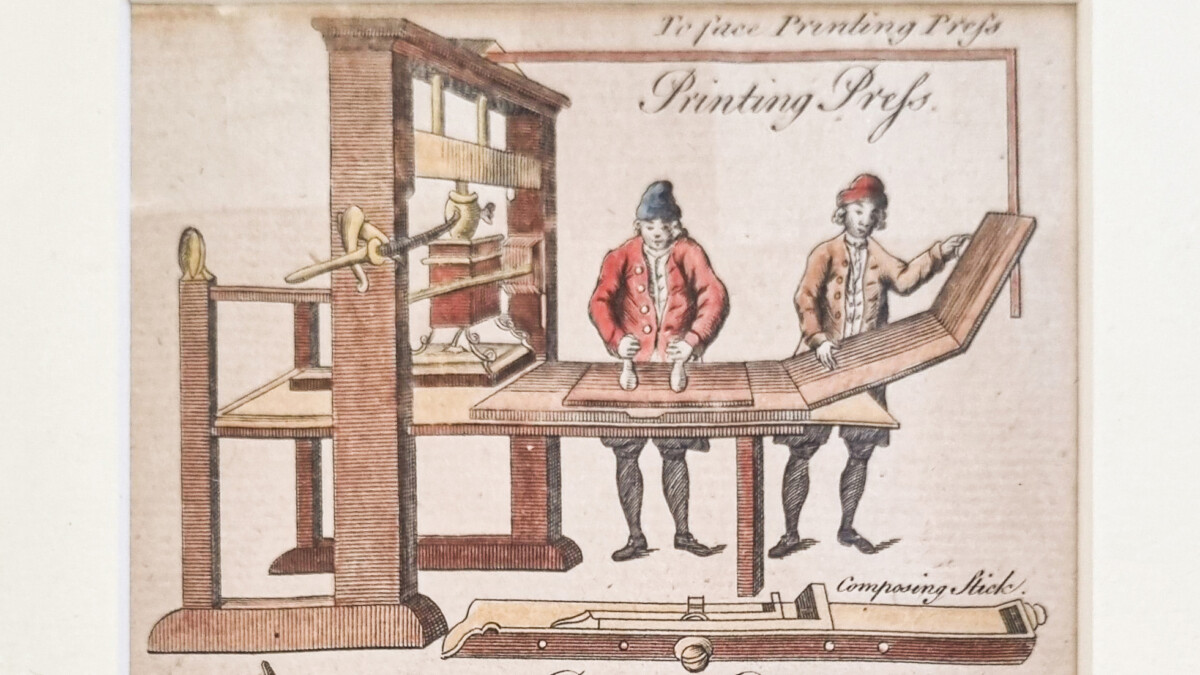
    The way we intake and share our knowledge and thinking today owes a lot to the groundbreaking invention from the 15th century; the printing press. Prior to its invention, books were slowly, painstakingly handwritten, which made them very expensive and rare. This made access to written knowledge a hot commodity that was kept protected by the wealthy elite who could afford literature. Further dividing how literacy could be enjoyed between demographics.  

    Printed books were not well accepted at first, because handwritten pieces were seen as a status symbol by the elites, so giving the lower-class access to these ways was not top priority. They wanted to keep the exclusivity of books by not letting them become affordable and accessible. Therefore, the printing press was not accepted by the wealthy folk; instead, it was taken advantage of by the poor. Suddenly, the less fortunate were able to be exposed to education and information through reading that was once only available to the rich. Society was now able to become more educated thanks to this invention. 

    Johannes Gutenberg developed the printing press in Germany in the 1400’s. One of the first and most notable works of the early printing press was the 42-line Bible. This piece was proof of the power of mass production during this time and made it truly superior to any other form.  

    The effects of the printing press are still true to this day. The press laid groundwork for today’s publishing ways. More people gained a love for reading due to this invention, turning literature mainstream and encouraging more people to gain and share knowledge. Ultimately, the invention changed society and communication for the centuries to come. It has had a truly lasting impact on the world. 

Finding the Origin of an Engraving with Printing Press - iBookBinding -  Bookbinding Tutorials & Resources

 Online Privacy

    The internet doesn't forget, or forgive. Every post, photo, or comment put online can be found again in one way or another. Whether it's screenshotted or retrieved, it is literally impossible to erase one's lasting footprint. This permanence can has severe consequences, it’s a youthful mistake resurfacing during a job search or private content being used to ruin one's life.

    I believe the most devastating example of online permanence is revenge porn. This means the non-consensual sharing of explicit sexual images or videos, often by former partners, to humiliate or blackmail victims. This media would have originally been shared in trust but is now haunting. Despite growing legal protections, such as laws criminalizing the act in many countries, victims still struggle to have their images removed entirely. The emotional and reputational damage can be severe, impacting relationships, careers, and especially mental health. Social media platforms and internet service providers have taken steps to combat revenge porn, but the rapid spread of content across various deep dark corners of the internet makes complete abolition of content pretty much impossible.

    Beyond individual privacy concerns, government surveillance is another major issue in online privacy. Governments worldwide track citizens through digital means, monitoring emails, social media activity, and even personal messages under the disguise of national security. This has caused debates on privacy and security. In most cases, citizens are unaware of how much their data is being collected, and laws surrounding digital surveillance are confusing and lacking.

    The government has to take stronger actions to protect civilian online privacy by making stricter regulations on data collection and hold companies more accountable to keep user information locked. Also, clearer laws should be in place to combat revenge porn, it must become easier for victims to seek help and justice, and have harmful content removed before it can ruin the victims wellbeing. 

    Given these concerns, individuals must also do a better job to protect their online privacy. One must think before posting or sending. Even seemingly harmless posts can be misinterpreted or used to hurt you later. Second, use privacy settings on social media to limit access to personal content. Third, choosing encrypted messaging services and browsing webs to minimize government tracking or hacking.

21 Easy Steps to Protect Your Digital Privacy & Security in 2021


Tuesday, February 11, 2025

EOTO Form of Communication Response

    THE CARRIER PIGEON

    I wish I knew who invented pigeons, but that's an answer I know I don't have. I can tell you who invented carrier pigeons, though. Carrier pigeons were invented (first introduced) by the Egyptians under Pharaoh Akhenaten, in 1350 BC. They were used as an advanced flood warning system. Apart from the constant risk of invasion from other civilizations, flooding of river-based societies was the biggest issue. Societies relied on the river to produce hydration to keep their crops growing; allowing their people to stay fed, and make money. Fixing this flood problem was vital in keeping entire cities from being destroyed. Egypt was a step above the rest in this area due to their ability to adapt to the annual flooding, instead of letting it ruin them; which is a main reason for their wealth, power, and prosperity. Egypt was not the only civilization to maximize the secret talent of pigeons before Christ. In 776 BC, during the first ever Olympic Games, carrier pigeons were utilized. Each athlete brought his own personal pigeon, after a victory, he would send it home to deliver the good news. This sounds like a more positive message than “save your family the Nile is flooding!” 

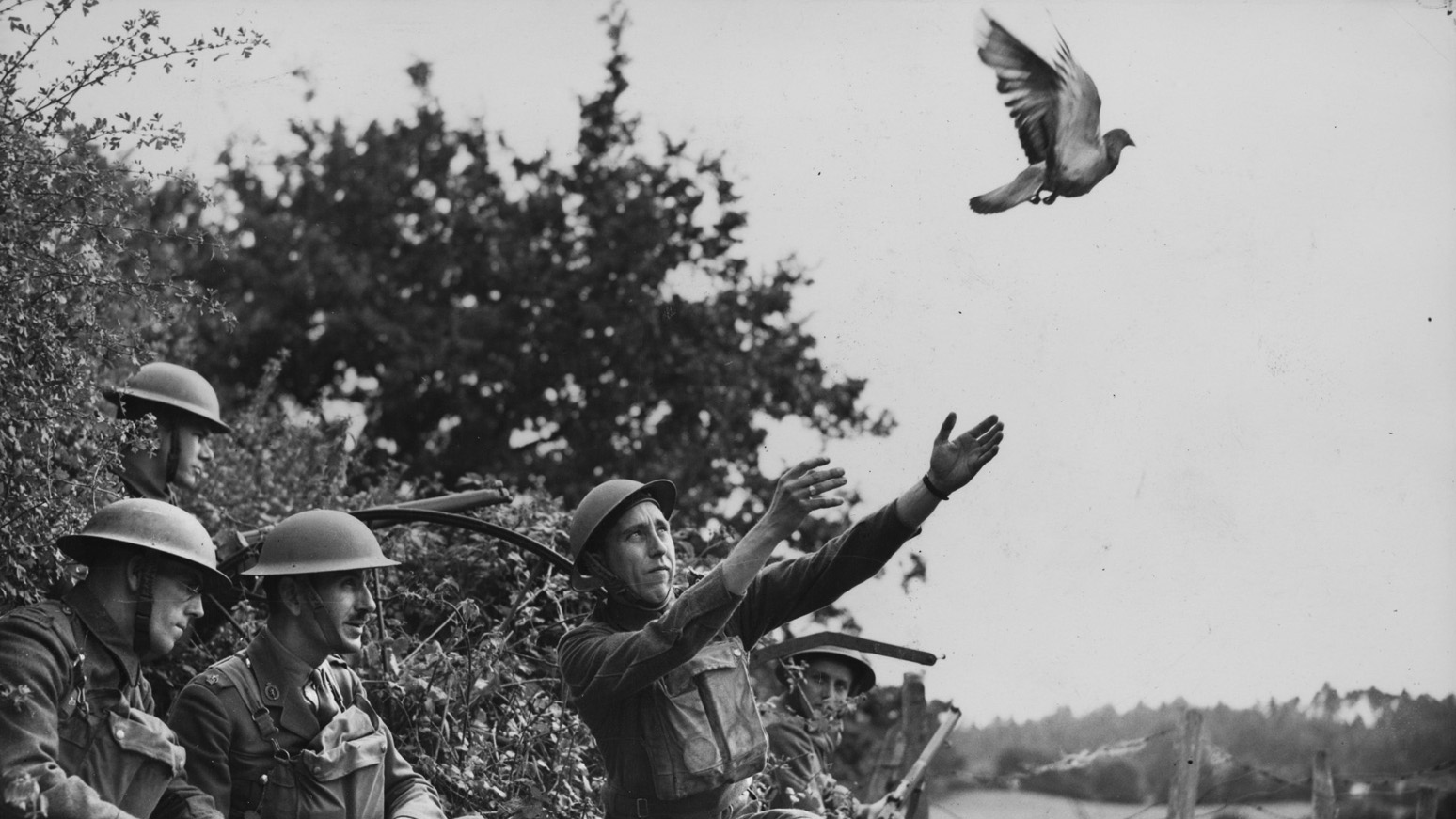
    It is safe to say that the two world wars dramatically shaped our planet. It is also no secret that carrier pigeons played an important role in the war, being a necessity of communication for both ally and axis powers. They changed the wars due to their insane reliability, with upwards of 95% success rates in delivering urgent information. They were sometimes the lone means of communication between command posts and advancing forces; especially, when radio communication was unavailable or destroyed, exemplifying their great importance. Heroic pigeons, like Cher Ami of the American Forces, saved hundreds of lives by bailing out trapped troops with a clutch last-minute message for backup. Cher Ami delivered his note despite being shot in the chest, blinded in one eye, and losing a leg. Ami is only one example of many, where a pigeon saved the day on the battlefield by doing the job that no man could accomplish. Pigeons solved a plethora of problems, but doing a job no human could do is at the top of the list. They changed wartime communication forever, while also emphasizing the glaring need to create more efficient and reliable means of communication for future war efforts. Thankfully, new modes have since been created and utilized by those at war. I'm sure Seal Team Six was grateful to not have to send a pigeon back to base when their Stealth Black Hawk Helicopter crash landed into the wall of Osama Bin Laden’s compound during operation Neptune Spear. 


Croix de Guerre Medal – ADRIANA SASSOON
Cher Ami

    Due to the carrier pigeons' success alerting civilizations of disaster, excellent rate of achievement at battle, heroic tendencies in the face of danger, a proven track record having saved hundreds at war, and trailblazing new forms of wartime communication, I cannot say there was a single negative regarding these pigeons during their time being used. Nowadays, in retirement, these pigeons mainly just flock the busy sidewalks of big cities and drop surprises on unsuspecting victims; but, after what they did for us in wartime, we should be a little more appreciative of them. 


Warfare's Unsung Pigeon - Warfare History Network

 Final Post - Disruptive Technologies      For my final blog post, I have decided to follow a topic from the second section of our prompts....